PRP Hair Treatment for Women in Enfield | Hair Loss Help
PRP Hair Treatment for Women in Enfield
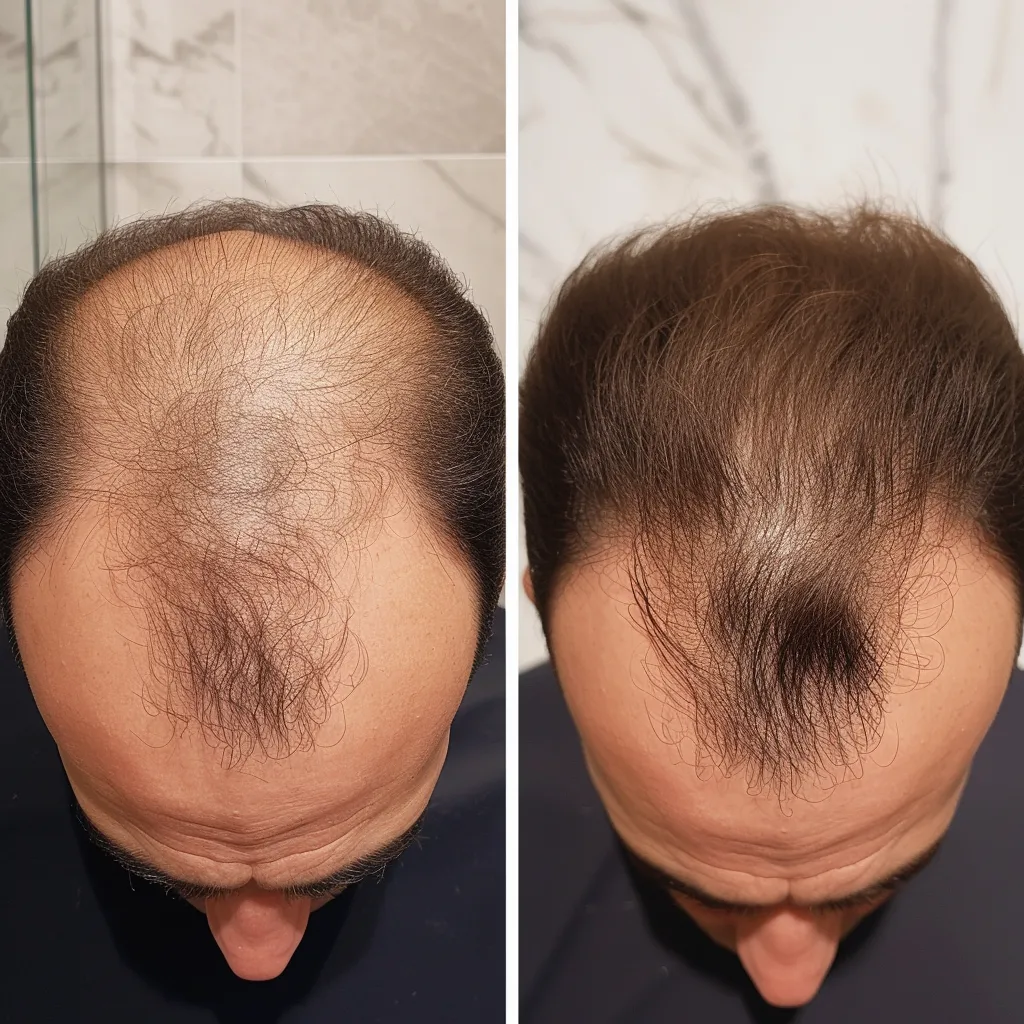
Women’s hair loss rarely gets talked about honestly. It gets hidden behind volumising shampoos and tight ponytails, while the parting slowly widens and the bathroom floor tells the real story. If that is your story, PRP hair treatment for women in Enfield at Shamis Health & Beauty on Hertford Road offers something refreshingly concrete: a course of sessions using your own blood plasma, given by trained staff, with pre-treatment screening and straight answers before anything begins.
Consult → Screen → Treat, if suitable. A 3-session plan, reviewed as you go.
You can book PRP hair treatment directly, but women’s hair loss has its own patterns and its own traps — postpartum shedding, hormonal shifts, styles that pull — and the right first step depends on which one is yours. Here is the honest map.
Why women’s hair loss is different
Male hair loss is mostly one story: genetics, temples and crown, gradual and predictable. Women’s hair loss is several stories wearing the same coat. Female pattern thinning spreads diffusely across the top and parting rather than receding. Postpartum shedding arrives two to four months after birth as hormones reset — alarming, but usually temporary. Perimenopause and menopause can thin hair as oestrogen shifts. Tight braids, weaves and ponytails cause traction loss along the hairline. And iron deficiency, thyroid problems and hormonal conditions like PCOS all quietly thin hair from the inside.
That variety is exactly why guessing fails. The NHS guidance on hair loss advises seeing a GP to understand the cause before visiting any commercial clinic — and we fully support that. Sudden patchy loss, scalp symptoms, or shedding alongside other changes belongs in a surgery first, not a salon.
There is a middle path too, and it lives in our building. A female health blood test package or a simple ferritin test can check the common hidden drivers with same-day results — so whatever you do next starts from facts.
What PRP actually is, in plain English
PRP stands for platelet-rich plasma, and the process is simpler than the name. We take a small sample of your blood — about the same as an ordinary blood test — and spin it in a centrifuge. That separates out the plasma, the golden layer packed with platelets. Platelets carry growth factors, the signalling proteins your body uses for repair. That concentrated plasma is then injected carefully into the thinning areas of your scalp.
The idea is to deliver a concentrated dose of your own growth factors exactly where follicles are struggling, supporting thicker, healthier growth. Because the plasma comes from your own blood, there is no donor material and no synthetic drug involved — it is you, refined and returned.
Now the honesty. The evidence for PRP in female pattern thinning is promising and growing, but it is not a guaranteed regrowth treatment — the NHS says it plainly about every hair loss option: no treatment is 100% effective. PRP works with the follicles you still have, which is why earlier thinning responds better than long-established loss.
Which women does PRP suit?
PRP tends to suit women with early-to-moderate female pattern thinning — the widening parting, the see-through crown, the ponytail that has lost a third of its bulk. It can also suit women whose thinning has stabilised after a hormonal shift, once the underlying cause is understood and managed.
Some situations call for patience or a different door first. Postpartum shedding usually resolves on its own within a year — PRP is rarely the right spend there, and we will tell you so. Hair loss with scalp symptoms, sudden patches, or anything unexplained needs a GP before a clinic. And if you are pregnant or breastfeeding, PRP is not suitable — full stop. Clients come to us from right across North London, and the ones who leave happiest are the ones we were honest with on day one.
PRP hair treatment for women: your 3-session plan
PRP is a course, not a one-off. The standard plan is three sessions, spaced roughly four to six weeks apart, with progress reviewed as you go — then maintenance sessions a few times a year if you are happy with where things settle. We photograph progress (with your permission), because mirrors lie and photos do not.
You will find the clinic at 530 Hertford Road, Enfield EN3 5SS — an easy trip from Enfield Highway, Ponders End, Brimsdown, Southbury and Edmonton, on the 279 and 349 bus routes with parking nearby. We are open Monday to Friday, 10am to 6pm, and Saturday to Sunday, 1pm to 6pm.
Each session follows the same careful shape. The team reviews your progress, takes a small blood sample from your arm, and spins it while you relax. Your scalp is cleansed, and a trained member of staff places the injections across the thinning areas using sterile, single-use equipment — most women describe quick pinches and pressure rather than real pain, and the whole visit usually takes 45 minutes to an hour. Afterwards your scalp may feel tender or look a little pink for a day; most clients go straight back to normal life with simple aftercare advice on washing and styling.
If anything concerns you between sessions, call us — and if you ever feel seriously unwell, contact your GP or NHS 111.
Pairing PRP with the right investigations
The smartest female hair plans rarely involve PRP alone. If you have never investigated why your hair is thinning, adding a thyroid test or a menopause hormone test to your first visit can be genuinely eye-opening — two of the most common hidden drivers of female hair thinning, both checkable the same day.
PRP also has a sister treatment: the same plasma technique applied to skin, often called the vampire facial, on our PRP hair and skin page. And if you would simply like to talk your situation through before committing to anything, a consultation is always available. Nobody will rush you.
FAQs
Will PRP help my postpartum hair loss?
Usually, waiting beats spending. Postpartum shedding is driven by hormones resetting after birth, and in most women it resolves by itself within six to twelve months. If your shedding has not settled after a year, or it came with other symptoms, that is worth a GP visit or blood tests first. We would rather tell you that than sell you a course you did not need.
Can menopause cause my hair to thin?
Yes — shifting oestrogen and progesterone levels around perimenopause and menopause commonly thin hair across the top and parting. It is one of the most frequent stories we hear. A menopause hormone test can confirm where you are, and PRP can support the follicles you still have — but the honest answer usually combines understanding your hormones first, then treating.
Does PRP work for female pattern hair loss?
The evidence is promising and growing, and many women respond well — but it is not guaranteed, and no honest clinic will promise regrowth. Results depend on the stage of your thinning, the underlying cause, and completing the full course. Earlier thinning generally responds better, which is why we encourage women to come in sooner rather than later.
Is PRP safe while breastfeeding?
No — we do not offer PRP during pregnancy or breastfeeding, and any responsible clinic will say the same. It is not that the plasma is foreign (it is your own blood), but this season of life calls for caution with any elective procedure. The door is open afterwards, and we will happily see you then.
How many sessions will I need?
The standard course is three sessions, spaced four to six weeks apart, because hair grows in slow cycles and one session rarely tells the full story. After the course, many women choose maintenance sessions a few times a year. We review progress as we go and will always tell you honestly whether continuing makes sense.
When will I see results?
Think months, not weeks. Reduced shedding is usually the first change, often noticed after the second or third session. Visible thickening takes longer because hair itself grows slowly — most responders judge their results three to six months in. Anyone promising instant regrowth is not being straight with you.
Book Your PRP Hair Treatment in Enfield
Book PRP hair treatment for women Enfield at Shamis Health & Beauty, 530 Hertford Rd, Enfield EN3 5SS. Call 07432 289084 or 07394 690498. Don’t worry — you are in good hands.
Results vary; a consultation decides suitability.